BA (Hons) Animation
Fact file
Typical offer
Course length
- 3 years full-time
- 4 years full-time with placement
- 4 years full-time with foundation year
Course information
Features and benefits

Be part of SODA
A £35m investment into specialist spaces with the latest technologies, award-winning teaching, research and networks that will drive the next generation of creative content.

Build connections
The programme has excellent links with industry, which offers opportunities to access industry professionals through varying means such as live briefs, panel events, portfolio reviews and/or university projects. These will vary.

Employability
As part of the School of Digital Arts you will be encouraged to innovate through interdisciplinary study and collaboration to become a highly creative and employable professional to allow you to compete successfully in this rapidly growing field.

Hone your skills
You will be offered opportunities throughout the course, to create animated films allowing you to develop core creative, design, narrative and cinematographic skills desired by potential employers in the animation industry.

Forge your path
The course is designed to allow you to specialise, if you so wish, in one specialist area of the animation process to refine your individual artistry.

Specialist facilities
You will have access to professional creative studios containing industry standard software, hardware and making facilities supporting 2D hand-drawn and rigged, 3D and stop motion techniques. All students will be offered the opportunity to try these.

SODA community
You'll be immersed in a dynamic, thriving creative community, where exciting events and opportunities are constantly unfolding — check out the latest happenings on our news page.
Accreditations, awards and endorsements

Year 1
Core modules
Animation Principles
Exploring Animation
3D Animation
Visual Storytelling
Study and assessment
Ten credits equates to 100 hours of study, which is a combination of lectures, seminars and practical sessions, and independent study. A three-year degree qualification typically comprises of 360 credits (120 credits per year). During the course, you are likely to be required to engage in collaborative projects, practical assessments, group work activities, and to give presentations to your peers/tutors. The exact composition of your study time and assessments for the course will vary according to your option choices and style of learning.
Placements
Taught by experts
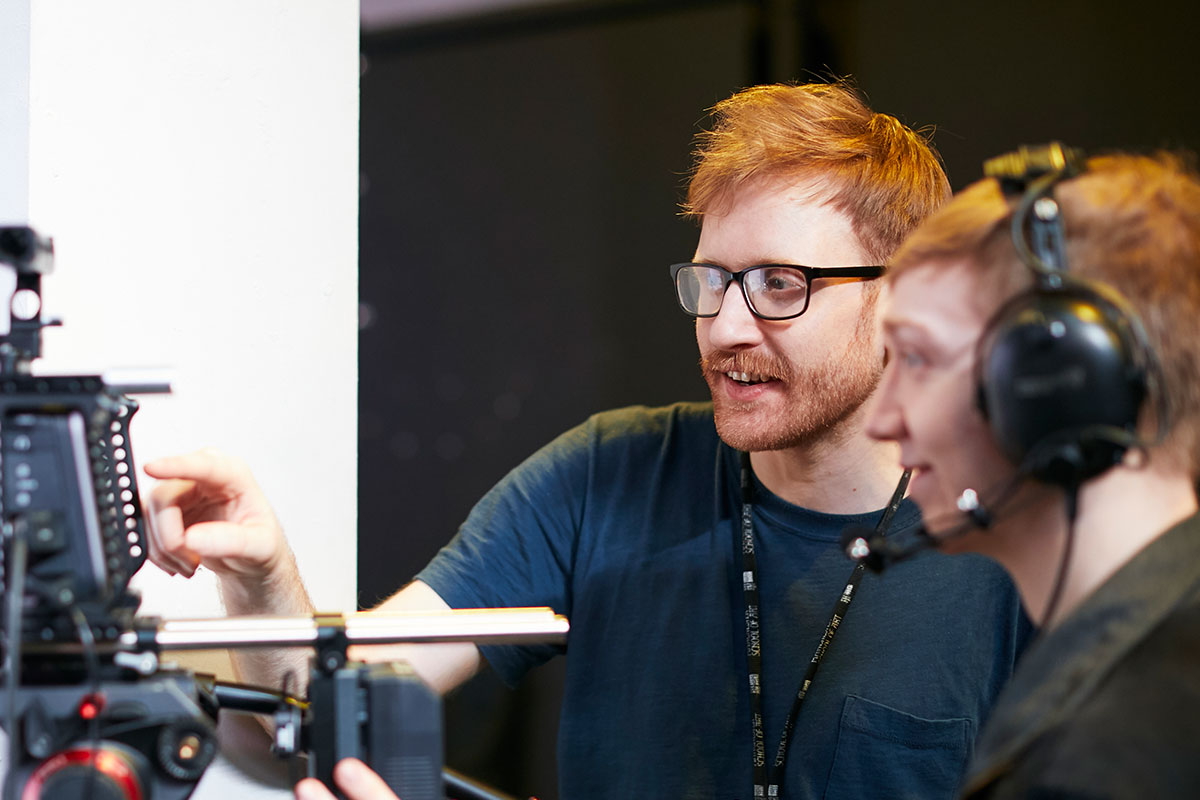
BA (Hons) Animation is part of the School of Digital Arts (SODA) at Manchester Met. Discover more about the school and who you’ll be working with if you choose to study this course.
Entry requirements
Typical offer
104-112 UCAS tariff points
IELTS score
6.0 overall with no individual element below 5.5
Portfolio
We will ask for a portfolio of your work as part of your application
UK students
Level 3 qualifications
104-112 UCAS tariff points.
Level 2 qualifications
Additional requirements
International students
Country-specific entry requirements
Find your country for specific entry requirements
Fees and funding
Careers support and prospects
Employed or in further study
87.6% of our UK-domiciled, full-time, first degree graduates are employed or in further study 15 months after graduation.
Graduate Outcomes survey 2022/23 leavers, HESA data.
Explore your options and build sought-after skills
Earn while you learn
Find out more
Find your perfect placement
Find our more
Build skills for your future
Find out more
A career as unique as you
Your city, your community, your campus
Want to know more




How to apply
You can apply for this course through UCAS.
UCAS code(s):
- D367
Institution code:
- M40
Get advice and support on making a successful application.
You can review our current terms and conditions before you make your application. If you are successful with your application, we will send you up to date information alongside your offer letter.
Disclaimers
Programme review
Our programmes undergo an annual review and major review (normally at 6 year intervals) to ensure an up-to-date curriculum supported by the latest online learning technology. For further information on when we may make changes to our programmes, please see the changes section of our terms and conditions.
Important notice
This online prospectus provides an overview of our programmes of study and the University. We regularly update our online prospectus so that our published course information is accurate. Please check back to the online prospectus before making an application to us to access the most up to date information for your chosen course of study.
Confirmation of regulator
The Manchester Metropolitan University is regulated by the Office for Students (OfS). The OfS is the independent regulator of higher education in England. More information on the role of the OfS and its regulatory framework can be found at officeforstudents.org.uk.
All higher education providers registered with the OfS must have a student protection plan in place. The student protection plan sets out what students can expect to happen should a course, campus, or institution close. Access our student protection plan.