
MEng (Hons) Electrical and Electronic Engineering
Engineers develop and harness advanced technology to drive global progress. On this degree, you’ll build the skills to accelerate your own progress.
Fact file
Typical offer
Course length

Course information
Features and benefits

Taught by leading researchers
100% of our research in engineering is world-leading or internationally excellent, with 75% is at the highest 4* level (REF 2021).

Placement opportunities
The five-year placement route offers the opportunity to spend your third year working on a placement with a relevant employer – gaining the skills and experience that can boost your career prospects.

Collaborate with industry
Tackle real-world projects set by our industry partners, with the chance to develop valuable skills and learn from feedback, advice and insights from industry insiders

Study in cutting-edge facilties
Our engineering facilities include mechanical and electrical engineering labs, a light manufacturing workshop, machining and materials testing equipment and a cyber-physical lab containing some of the latest industry 4.0 technologies

Professional study environment
Study in our £115m Dalton building, designed for collaboration, innovation and world-class learning and research, where you can develop the practical skills, confidence and real-world experience that employers value.
Accreditations, awards and endorsements

Year 1
Core modules
Introduction to Engineering Principles
Engineering Skills
Further Engineering Principles
Design Project
Study and assessment
Ten credits equates to 100 hours of study, which is a combination of lectures, seminars and practical sessions, and independent study. A three-year degree qualification typically comprises of 360 credits (120 credits per year). During the course, you are likely to be required to engage in collaborative projects, practical assessments, group work activities, and to give presentations to your peers/tutors. The exact composition of your study time and assessments for the course will vary according to your option choices and style of learning.
Additional information
Placements


Taught by experts
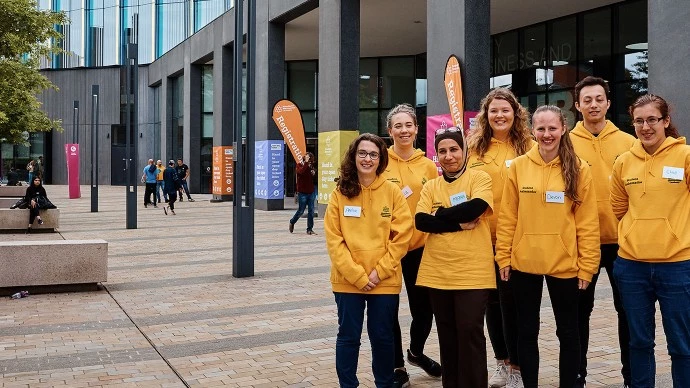
MEng (Hons) Electrical and Electronic Engineering is part of the School of Engineering and Environment at Manchester Met. Discover more about the school and who you’ll be working with if you choose to study this course.

Our School of Engineering and Environment is driven by purpose. Students do not simply study real world challenges. They help solve them. By learning alongside academics who are active in research and working with industry, you will contribute to a more innovative, sustainable and resilient future.
Entry requirements
Typical offer
112-120 UCAS tariff points
IELTS score
6.0 with no component below 5.5, taken within two years of course start date
UK students
Level 3 qualifications
112-120 UCAS tariff points.
Level 2 qualifications
International students
Country-specific entry requirements
Find your country for specific entry requirements
Fees and funding
Careers support and prospects
Employed or in further study
87.6% of our UK-domiciled, full-time, first degree graduates are employed or in further study 15 months after graduation.
Graduate Outcomes survey 2022/23 leavers, HESA data.
Explore your options and build sought-after skills

Earn while you learn
Find out more
Find your perfect placement
Find our more
Build skills for your future
Find out more
A career as unique as you
Your city, your community, your campus

Want to know more




How to apply
You can apply for this course through UCAS.
UCAS code(s):
- 2W69
Institution code:
- M40
Get advice and support on making a successful application.
You can review our current terms and conditions before you make your application. If you are successful with your application, we will send you up to date information alongside your offer letter.
Related courses
Disclaimers
Programme review
Our programmes undergo an annual review and major review (normally at 6 year intervals) to ensure an up-to-date curriculum supported by the latest online learning technology. For further information on when we may make changes to our programmes, please see the changes section of our terms and conditions.
Important notice
This online prospectus provides an overview of our programmes of study and the University. We regularly update our online prospectus so that our published course information is accurate. Please check back to the online prospectus before making an application to us to access the most up to date information for your chosen course of study.
Confirmation of regulator
The Manchester Metropolitan University is regulated by the Office for Students (OfS). The OfS is the independent regulator of higher education in England. More information on the role of the OfS and its regulatory framework can be found at officeforstudents.org.uk.
All higher education providers registered with the OfS must have a student protection plan in place. The student protection plan sets out what students can expect to happen should a course, campus, or institution close. Access our student protection plan.